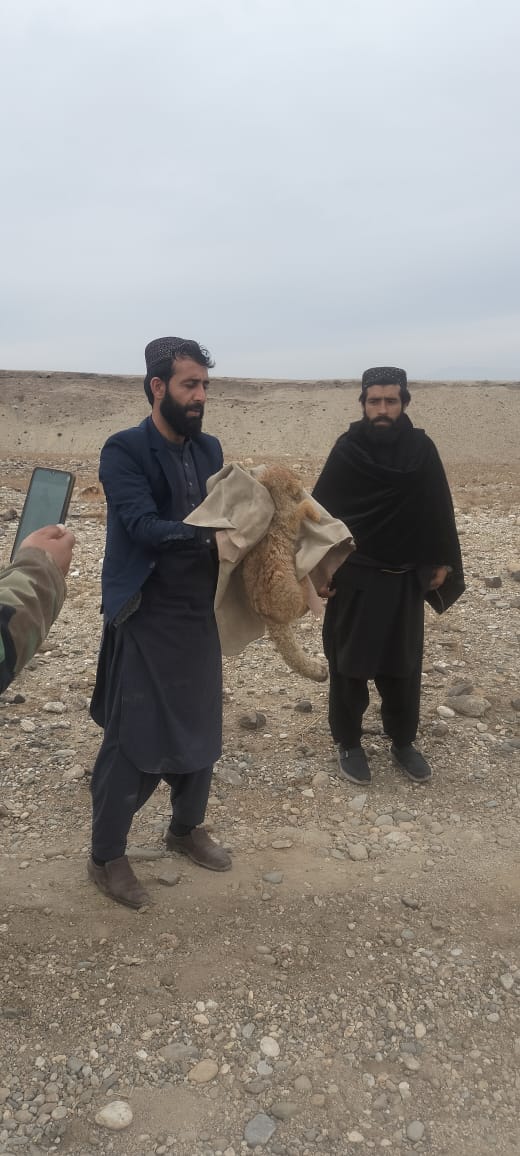
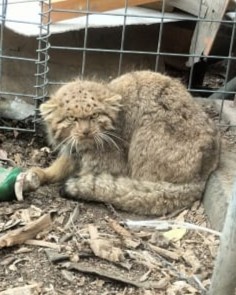
On 7 February, authorities in Nangarhar Province, eastern Afghanistan, announced that a Pallas’s cat which had entered a human-inhabited area was safely rescued and released back into the wild. Officials stated that the animal was returned to its natural habitat after ensuring its safety and well-being.
Scientific name: Otocolobus manul
The Pallas’s cat, also known as the Manul, is a small wild cat native to Central and Inner Asia, including Afghanistan. Despite its fluffy and compact appearance, it is a strictly wild species with highly specialized ecological needs.
Physical Characteristics
Pallas’s cats are easily distinguished from domestic cats by:
- Exceptionally dense and long fur, adapted to cold and dry climates
- A flat, broad face with low-set, rounded ears, reducing heat loss
- Short legs and a thick, bushy tail
- A compact body that gives the illusion of being larger than it actually is
Their unique facial structure and expression are not signs of aggression but adaptations to their harsh environment.
Habitat and Distribution
The species inhabits:
- Rocky степpe landscapes
- Semi-deserts and mountainous regions
- Cold, arid environments with sparse vegetation
In Afghanistan, Pallas’s cats are mainly reported in eastern and central regions, often using rock crevices, abandoned burrows, ruins, or natural shelters for protection.
Behavior
- Solitary and extremely shy
- Mostly active at dawn and dusk
- Hunts small mammals such as pikas, rodents, and birds
- Avoids human contact and becomes highly stressed when disturbed
Conservation Status
The Pallas’s cat is currently classified as Near Threatened on the IUCN Red List. Major threats include:
- Habitat loss and degradation
- Decline of prey species
- Accidental trapping and hunting
- Human disturbance and illegal capture
Because of their sensitivity to stress, handling or captivity often leads to death, making protection in the wild essential.
Importance for Afghanistan’s Biodiversity
The presence of the Pallas’s cat is an indicator of ecological balance in fragile mountain and steppe ecosystems. Its survival reflects the health of prey populations and landscape integrity.
Protecting this species contributes directly to:
- Biodiversity conservation
- Ecosystem resilience
- Preservation of Afghanistan’s natural heritage
Key Message
The Pallas’s cat is not a stray cat. It is a rare symbol of Afghanistan’s wildlife, deserving protection, distance, and immediate reporting to environmental authorities when encountered.