Analyses
Poisoned Gold; The Environmental Impacts of Gold Mining in Afghanistan
At the confluence of the Panj River and the Kokcha River in northern Takhar Province lie the ruins of Ai Khanoum, one of the easternmost Hellenistic cities of the ancient world. Founded after Alexander the Great's conquests in Central Asia, the city became a crossroads of cultural exchange, trade, and natural wealth. For centuries, merchants, rulers, and empires were drawn to the precious resources of northeastern Afghanistan, including lapis lazuli, gemstones, and gold.
Today, more than two thousand years later, this region remains one of Afghanistan's richest in mineral resources. Yet the new gold rush unfolding in the valleys of northeastern Afghanistan raises a different question: what is the environmental cost of extracting the treasures buried beneath these mountains?
Recent reports and satellite imagery indicate that, following the Taliban's return to power in 2021, gold mining activities have expanded significantly across the provinces of Takhar and Badakhshan. Traditionally carried out by local communities, gold mining has long provided an important source of income for many families in these regions. However, it has now become one of the most contentious issues in Taliban-controlled Afghanistan.
Afghan media have frequently reported tensions and clashes involving local residents, Taliban authorities, and mining companies linked to the group, many of them originating from other parts of the country. According to local residents, large mining companies have gradually displaced the small, community-based economies that once depended on traditional artisanal gold mining. Livestock farming—another essential source of income for rural communities—has also been severely affected by the degradation of grazing lands and the loss of pasture.
Competition and Tensions Over Gold Mining
Satellite imagery clearly shows dozens of mining sites stretching along the Panj and Kokcha rivers and across the surrounding hills. Bulldozers, heavy excavation equipment, and artificial water ponds bear witness to the rapid expansion of gold mining throughout the region.
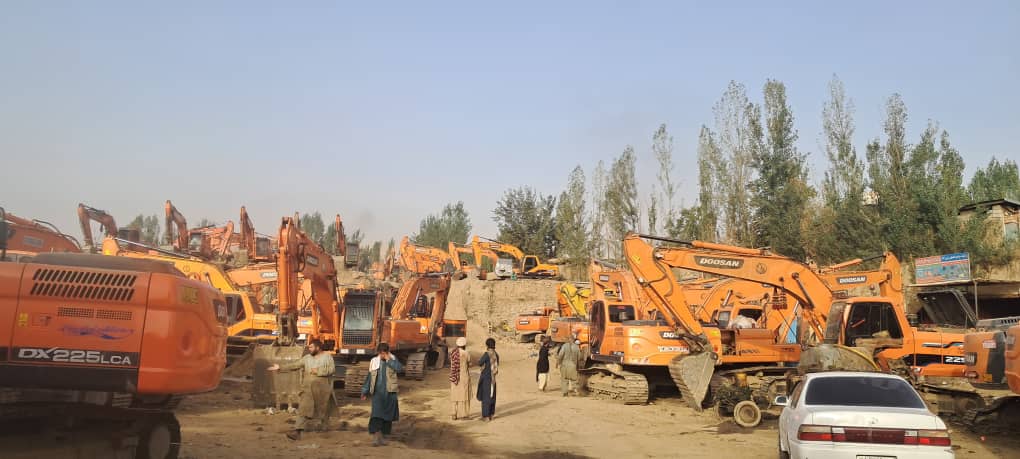
Gold mining has long existed in parts of Badakhshan and Takhar. However, mining activities have expanded dramatically in recent years, particularly since the Taliban returned to power in 2021. Companies linked to the Taliban—many originating from southern Afghanistan—as well as Chinese, Russian, and Turkish firms have established a significant presence across both provinces.
Mohammad, a local journalist, estimates that "at least twenty large companies" backed by Chinese, Russian, or Turkish investors, along with "hundreds of smaller operators" made up of local residents and people from Afghanistan's southern provinces, are currently involved in gold extraction.
There are no comprehensive official statistics on the number of active mining companies or their workforce. However, the Taliban administration's Ministry of Mines and Petroleum has stated that nearly 100,000 people work directly or indirectly in Badakhshan's gold mining sector. According to the ministry, mining activities are concentrated in the districts of Shahri Buzurg, Yawan, Kohistan, Raghistan, Khwahan, and Arghanjkhah.
The rapid expansion of mining companies into villages across Badakhshan and Takhar has fueled recurring tensions with local communities, whose livelihoods depend largely on farming and livestock. Residents accuse mining companies operating with Taliban support of degrading the environment and undermining their traditional sources of income.
The most recent violent incident occurred on 9 May 2026, when a confrontation broke out between mine workers and forces linked to the Taliban, including the Taliban's deputy governor of the southern province of Zabul. According to available reports, two people were killed and fifteen others injured.
As tensions have escalated, the Taliban have strengthened their security presence in the region. After previously deploying around 1,000 personnel to secure mining areas in Badakhshan, they sent additional reinforcements. On 20 May 2026, several Afghan media outlets reported the arrival of military convoys and security vehicles in the province.
According to Mohammad, foreign companies and firms from outside the region receive direct support from the Taliban authorities. He claims that Bashir Noorzai is responsible for providing security to foreign mining companies operating in the Chah Ab area. Companies from other Afghan provinces—particularly those based in the country's south—are also said to benefit from the backing of influential Taliban officials.
Competition between small local mining operators and large companies backed by the Taliban has intensified significantly. Against this backdrop, the Taliban authorities have recently refused to renew the mining licenses of several local companies. The press offices of the Taliban governors of Takhar and Badakhshan confirmed that the operations of a number of companies had been suspended because they allegedly lacked "legal authorization."
Local mining operators, however, dispute this explanation. They argue that the authorities systematically refuse to renew their permits under various pretexts while granting licenses to outside companies that enjoy political backing.
According to several local sources, competition over gold has also deepened internal rivalries between local Taliban commanders and officials sent from southern Afghanistan. These sources claim that, on the orders of the Taliban governor, mining tunnels and equipment belonging to companies linked to certain local Taliban officials were destroyed.
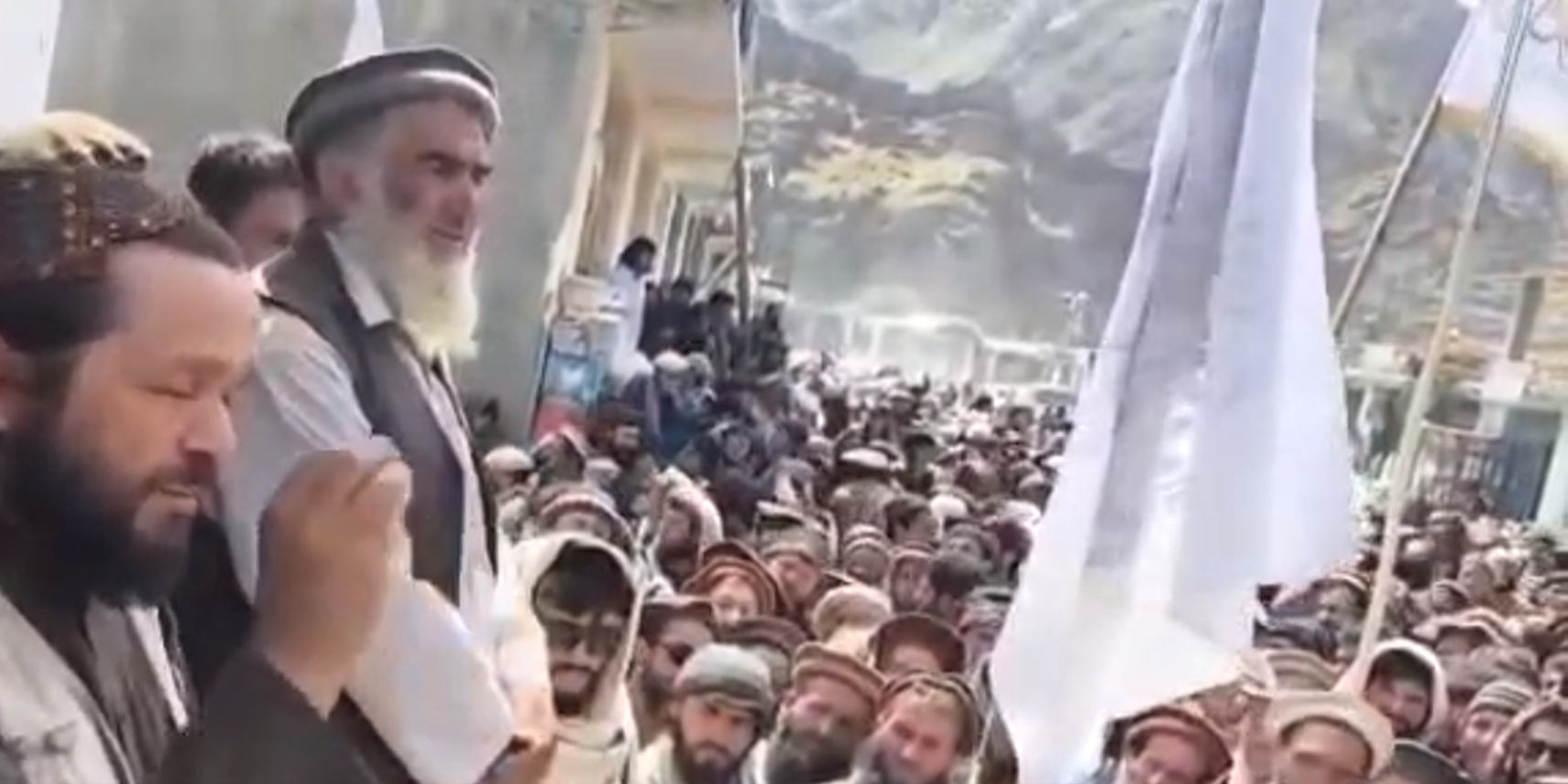
On 7 June 2026, residents of Nosai District in the Darwaz region of northern Badakhshan took to the streets to protest the suspension of their mining activities.
The tensions extend beyond disputes between local operators and outside companies. They also pit landowners against non-local mining firms that, according to multiple accounts, have sought to purchase—or, in some cases, seize through coercion—land believed to contain valuable gold deposits.
Afghanistan's Gold Belt: Where Are the Gold Mining Companies Operating?
As fast-flowing waters descend from the mountains of Badakhshan toward the west, rivers such as the Kokcha carry vast quantities of sand, gravel, and sediment. Near the ancient city of Ai Khanoum, the Kokcha joins the Panj River, which later merges with the Vakhsh River to form the Amu Darya.
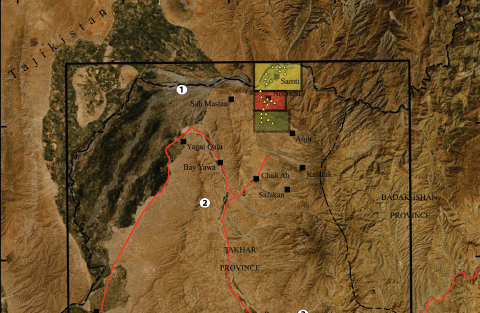
In the Samti region, the gradual flattening of the landscape has, over thousands of years, allowed extensive alluvial deposits to accumulate across a broad floodplain. Ancient riverbeds and paleochannels buried beneath these sediments have made the area one of the richest gold-bearing zones in northern Takhar Province.
It is also in this region that certain maps and satellite imagery reveal georeferenced points accompanied by annotations in Chinese, raising questions about the nature and purpose of surveys or activities conducted there.
Geological maps based on Soviet surveys carried out in the 1960s and digitized by the U.S. Geological Survey (USGS) in 2014 identify a vast gold belt stretching from northeastern Afghanistan into parts of the country's central regions. The most promising sections of this belt lie within the provinces of Badakhshan and Takhar.
One of the most significant confirmed gold deposits in northern Takhar is located in the Samti–Nuraba area. Geological evidence, local testimony, and the distribution of mining activities indicate that the principal gold-bearing zones extend from Samti along the Panj River southward toward Chah Ab and its surrounding riverbanks.
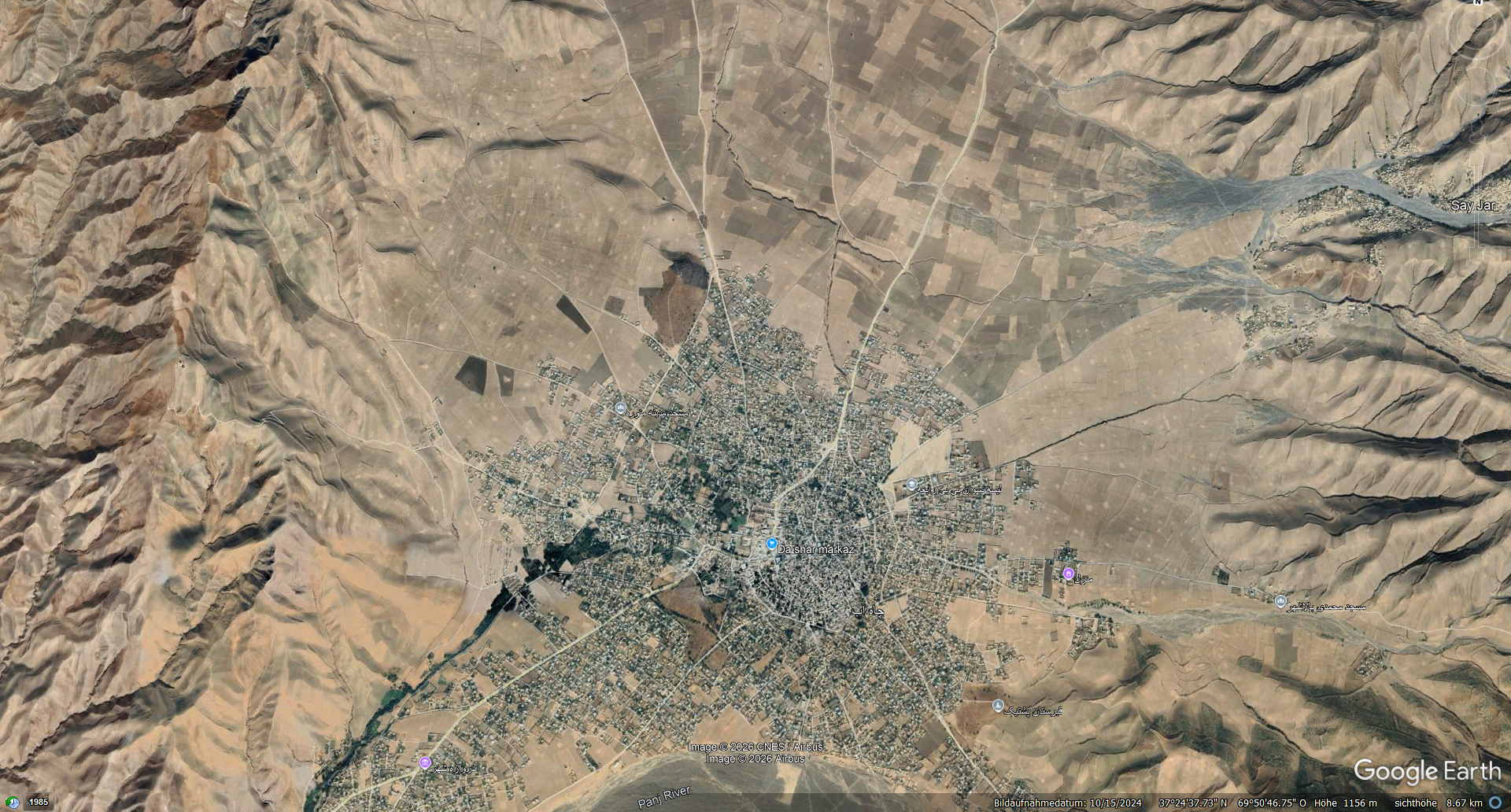
Satellite imagery shows that the highest concentration of mining companies-both large-scale operators and smaller enterprises-is located in the Chah Ab area, where they are exploiting ancient alluvial river channels, or paleochannels, rich in gold-bearing sediments.
The Samti–Chah Ab gold belt is more than a mining district. It is also one of the region's most important alluvial plains. Over centuries, the many streams flowing from the surrounding mountains into the Panj and Kokcha rivers have deposited thick layers of fertile sediment. These deposits have not only concentrated gold but have also shaped the region's agricultural lands, groundwater reserves, and local ecosystems.
This close relationship between geology, water, and human livelihoods helps explain why the rapid expansion of gold mining carries consequences that extend far beyond mineral extraction, affecting the long-term environmental sustainability of one of northeastern Afghanistan's most productive landscapes.
Les gisements d'or de Nuraba
The expansion of mining in this region is about more than extracting a valuable resource. It also puts at risk one of the foundations of local livelihoods. Agriculture, livestock farming, and access to water all depend on these alluvial landscapes, making their degradation a threat not only to the environment but also to the long-term resilience of local communities.
Farmland in Chah Ab District, Takhar Province. | Source: Google Earth; analysis by EQLIMA
"We No Longer Have Wild Pistachio Trees"
Before the expansion of gold mining, the hills surrounding Chah Ab were covered with wild pistachio trees. These woodlands provided an important source of seasonal income for local communities. Mohammad (a pseudonym), a local journalist, recalls that residents collectively protected the trees and shared the harvest during the picking season.
Pistachios and sunflower seeds were then traded for rice grown in the neighboring district of Yangi Qala through a traditional barter system. According to Mohammad, residents of Yangi Qala often joked that "the people of Chah Ab win us over with their pistachios and sunflower seeds."
Mohammad says that nearly all of the vegetation covering these hills has disappeared over the past two years as a result of intensive gold mining and large-scale earthmoving. "The land was taken over by the Taliban, and the mining companies destroyed what remained of the vegetation," he says.
On 9 May 2026, another violent episode highlighted the growing tensions surrounding gold mining. Mine workers clashed with forces linked to the Taliban's deputy governor of the southern province of Zabul, leaving two people dead and fifteen others injured.
According to local sources, Commander Fattah arrived in the area with several hundred people seeking mining concessions. Their objective, the sources say, was to divide and take control of a large green area in order to expand gold extraction.
Local residents opposed the plan, proposing instead that mining be carried out on only a small section of the site at first. They argued that this approach would have allowed the presence of gold deposits to be confirmed before expanding operations, while avoiding the large-scale destruction of vegetation, natural habitats, and communal grazing lands.
On 8 June, a resident of Khwahan District in Badakhshan provided Afghanistan International with images of the banks of the Panj River, claiming that "Taliban forces destroyed a green plain to make way for gold mining."
Environmental specialists warn that in many of the gold-bearing areas of Badakhshan and Takhar, the topsoil is exceptionally fragile. Often no more than 10 centimeters thick, this thin layer of fertile soil—essential for agriculture—can be destroyed within days by excavation work and the movement of heavy machinery.
Comparison of satellite images reveals the expansion of mining activities in the hills of Naw Abad (Nuraba), Takhar Province. Right: August 2023; left: June 2020. | Source: Google Earth; analysis by EQLIMA
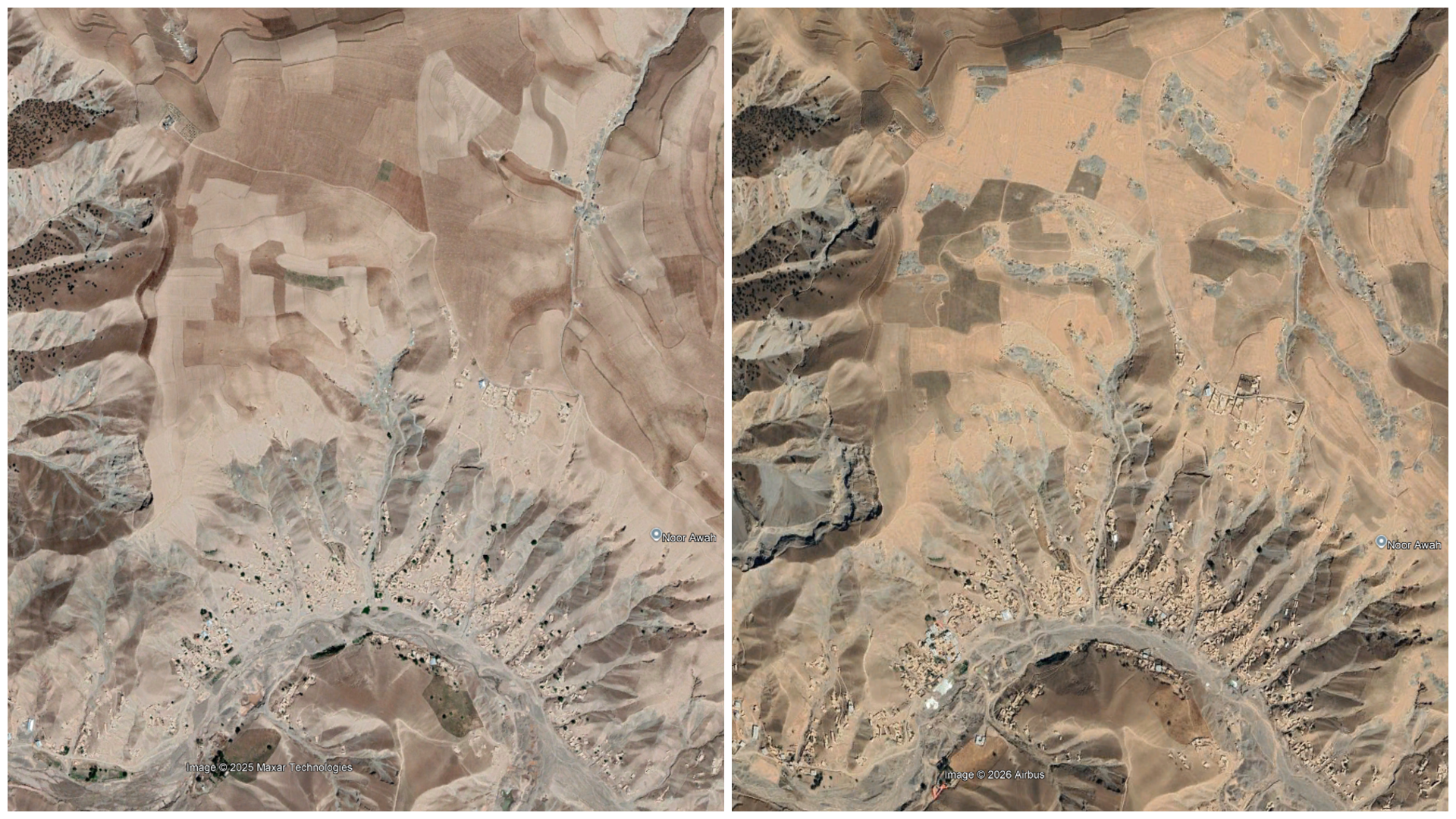
The most recent satellite imagery available for some of the areas examined in this investigation dates from 2023. However, according to testimony from local residents, journalists, and other sources on the ground, both gold mining activities and the resulting environmental degradation have accelerated significantly over the past two years. As a result, the impacts documented in this investigation are likely to underestimate the current scale of landscape transformation and environmental damage across the region.
From Traditional Gold Panning to the Suspicious Deaths of Miners
For generations, communities in Badakhshan and Takhar have recovered tiny particles of gold from the sand and gravel carried by the region's rivers, streams, and seasonal channels. Using simple tools, they wash the sediments to separate gold flakes—a traditional practice locally known as zarshouyi, or artisanal gold panning.
Today, particularly since the Taliban returned to power in August 2021, this small-scale livelihood has given way to a far more intensive form of extraction. Dozens of foreign companies and hundreds of local operators now rely on mechanized equipment, including excavators, to dig dozens of meters into the ground in search of the sediment layers richest in gold.
Because of its high density, gold naturally accumulates in the deepest layers of alluvial deposits. Abdullah, a local miner, explains: "Some companies dig more than 70 meters deep to reach the layer of white bedrock."
Geological studies show that alluvial deposits reach thicknesses of up to 40 meters in some areas, while economically viable gold-bearing horizons have been identified at depths of up to 28 meters.
In alluvial placer mining, one geological principle is well established: gold typically settles on what geologists refer to as a false bedrock—a dense, impermeable layer beneath the sediment. In simplified terms, the subsurface usually consists of a layer of topsoil, followed by sand and gravel, then larger cobbles and gold-bearing sediments resting on a harder, more compact layer of rock or tightly cemented gravel.
In many deposits, the highest concentrations of gold are found within the 10 to 50 centimeters immediately above this compact layer, which local miners often refer to as the "white bedrock." This is why mining operations continue excavating until they reach it: because gold particles are much heavier than surrounding sediments, they gradually settle and accumulate on top of this natural barrier over time.
Beyond the geological processes, however, photographs and videos collected during this investigation reveal the scale of the landscape transformation. Across many villages and valleys in Badakhshan and Takhar, mining operations have dramatically reshaped the natural terrain, carving vast excavation pits and altering the contours of hillsides and alluvial plains.
Some mining sites, known locally as Kargah ("workshops" or "mining sites"), have expanded to cover areas as large as an entire village, and in some cases, even the size of a small town.
Chemical Pollution: Mercury at the Center of Growing Concerns
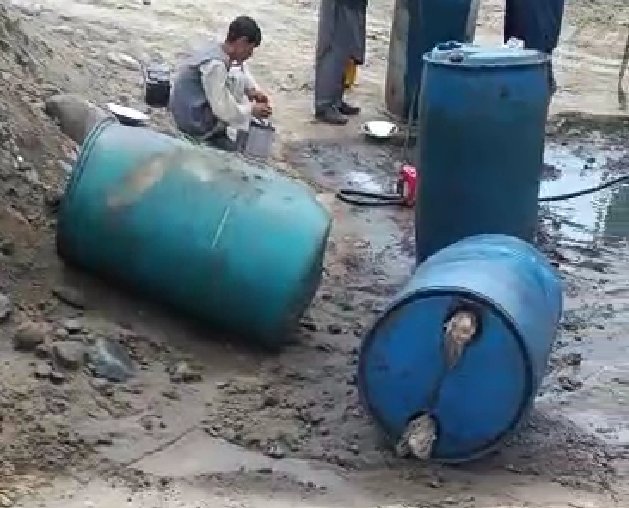
Gold extraction is no longer limited to traditional panning in rivers. Mining companies now excavate thousands of tonnes of soil and sediment from deep underground, sieve the material, and use chemical substances—primarily mercury, and in some cases cyanide—to separate gold from other minerals.
Ehsanullah, the owner of a gold mine in Takhar Province, says that many small and medium-sized gold processing facilities now rely on mercury. According to him, this technique has become widespread across the region under the influence of Chinese mining companies.
In this process, mercury binds with gold particles to form an amalgam. The amalgam is then heated, causing the mercury to evaporate and leaving the gold behind. Ehsanullah says he purchased 250 milliliters of mercury for 17,000 Afghanis (approximately US$300) at a local market in Kunduz. He adds that the mercury can be recovered and reused several times.
However, when recovery devices known as retorts are not used, mercury vapor is released directly into the atmosphere. This exposes both mine workers and nearby communities to significant health risks. Mercury is particularly hazardous to children and pregnant women and can cause neurological, kidney, and developmental disorders.
Some of the mercury used during gold processing also enters the soil and nearby waterways. In aquatic environments, it can be converted into methylmercury, one of the most toxic substances known. Methylmercury gradually accumulates throughout the food chain, contaminating fish and other aquatic organisms and ultimately affecting the people who depend on them. Its impacts can persist in river ecosystems for decades.
Health concerns are not limited to chemical exposure.
A local journalist reports that two workers at the Qatqati gold mine died only days apart during the past two months, although no definitive cause of death has been established. According to the journalist, the absence of forensic medicine and medico-legal investigation procedures in the region has made it impossible to determine the exact circumstances surrounding these deaths.
Mine workers typically earn between 30,000 and 45,000 Afghanis (approximately US$500–750) per month. Some of the larger mining companies employ 300 to 350 workers. Several employees say they are now required to sign declarations acknowledging that they understand the risks associated with gold mining and accept responsibility for the potential dangers of their work.
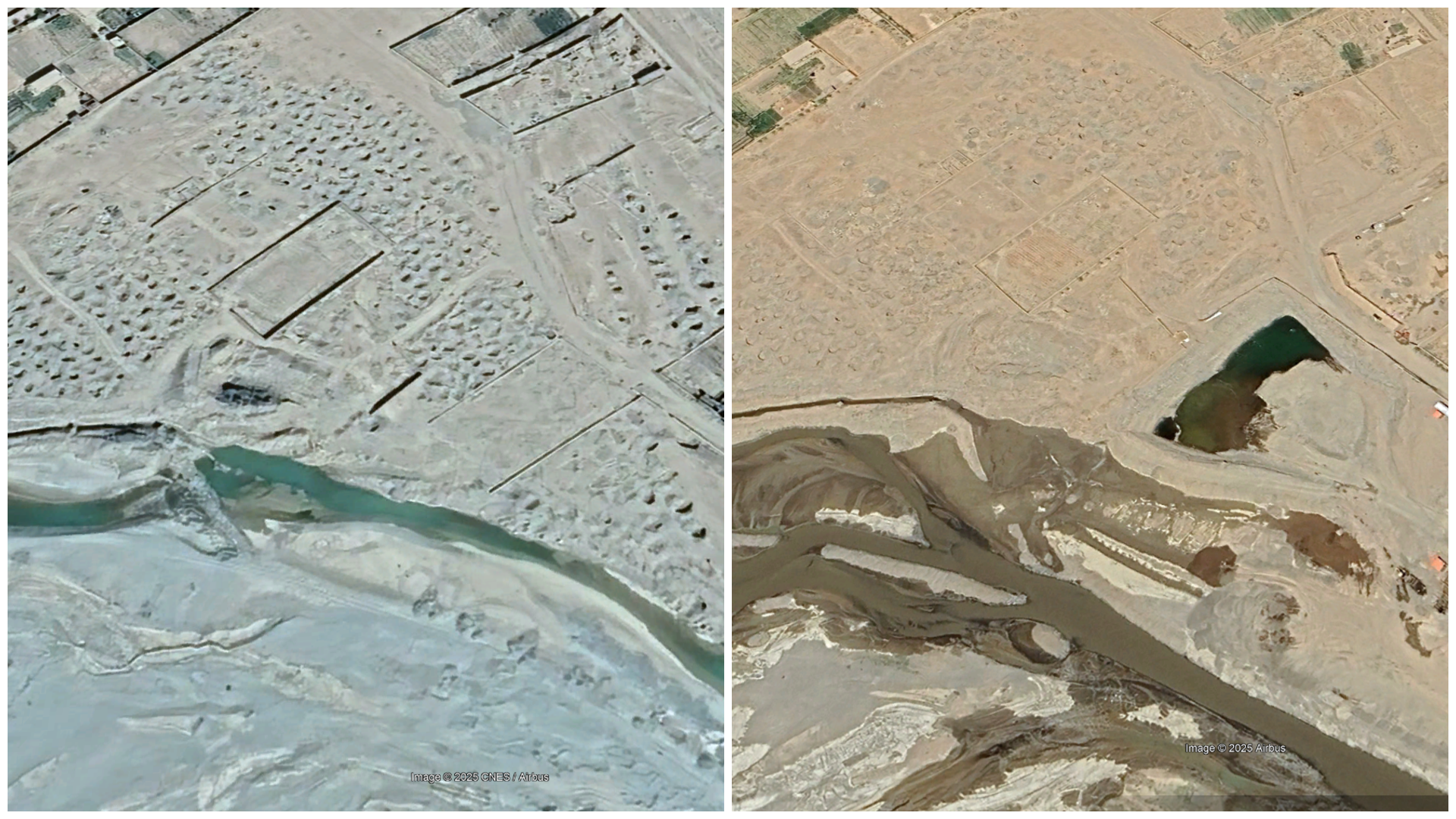
Satellite imagery also reveals the presence of large artificial ponds constructed near the Panj and Kokcha rivers. While the precise function of some of these facilities cannot be confirmed through remote observation alone, their size and proximity to mining sites suggest they may be used for washing gold-bearing sediments, storing process water, or settling mining waste.
Comparison of satellite images acquired in September 2022 and July 2023 suggests the construction of an artificial pond near the Kokcha River in Takhar Province. | Source: Google Earth; analysis by EQLIMA
Landslides: "An Entire Village Was Buried"
The scars left by gold mining are visible even from space. Satellite imagery reveals vast excavation sites, some covering areas as large as an entire village or even a small town, across several parts of Takhar and Badakhshan provinces. While the exact depth of these excavations cannot be determined from satellite imagery alone, their scale is sufficient to show that they have already profoundly altered the landscape.
Nader Pajouhesh, a geologist and former employee of Afghanistan's Ministry of Mines, explains that "mining practices that fail to meet technical standards alter the geomorphology of the landscape, which can, in some cases, increase the risk of landslides."
According to him, this vulnerability is rooted in the region's geology.
"From a geological perspective, much of northeastern Afghanistan lies within a relatively young mountain belt. The rocks are cut by numerous faults and fractures and are naturally prone to instability," he explains.
On 2 May 2014, a massive landslide buried the village of Ab Barek in Argo District, Badakhshan, beneath thousands of tonnes of mud and sediment. The exact death toll has never been conclusively established. The United Nations confirmed at least 350 fatalities, while local authorities at the time estimated that more than 2,100 people had lost their lives. The disaster remains one of the deadliest landslides in Afghanistan's modern history.
Pajouhesh emphasizes that the risks are not determined by geological conditions alone. The destruction of vegetation cover, whose root systems play a crucial role in stabilizing soils, is another major contributing factor. Increased water infiltration into both shallow and deeper soil layers further reduces the cohesion and friction between layers of soil and rock, making slope failure more likely.
According to the geologist, the economic benefits of gold extraction can be misleading.
"In the short term, gold generates income. But over the long term, the environmental and social costs can be far greater, and, in some cases, irreversible, for local communities."
Water Pollution and River Diversion
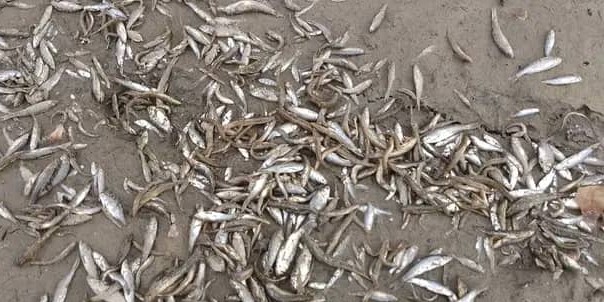
On 4 January 2026 (**15 Jadi 1404** in the Afghan calendar), clashes between residents of the Dara-ye Fazel area and Taliban forces left four people dead. According to local residents, the conflict was triggered by the drying up of several natural springs, which they attribute to the disruption of underground water flows caused by mining activities.
The Dara-ye Fazel Valley, located about 10 kilometers from the Amu Darya, depends on a network of irrigation canals supplied by natural springs emerging from the surrounding hills. Residents say that excavation work carried out by a gold mining company altered underground water circulation, leading to the gradual depletion of these springs.
According to testimonies gathered on the ground, Taliban authorities asked the local population to allow the mining company to resume its operations. The residents refused.
A local journalist reported that at least one person was arrested following the protest.
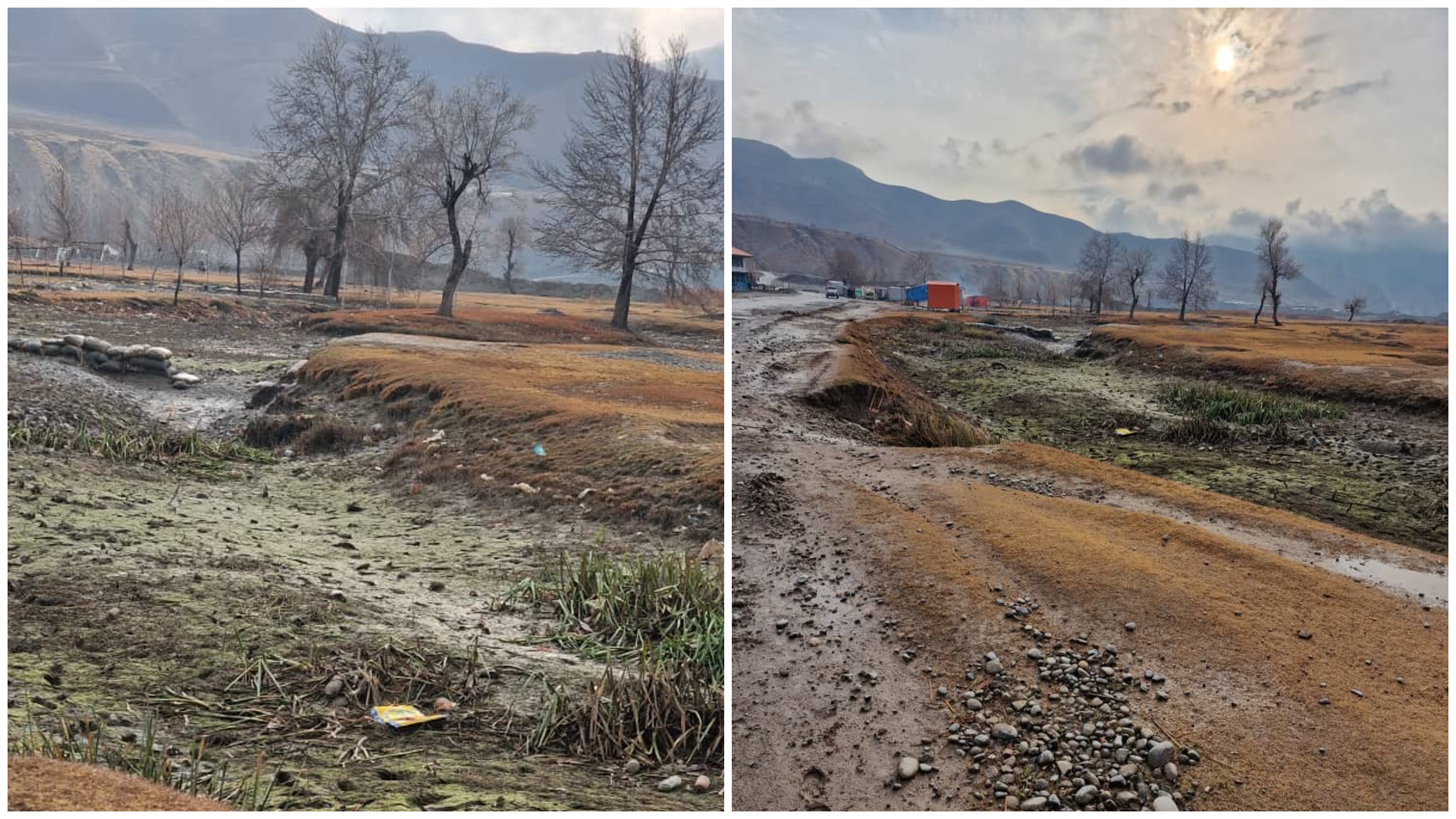
Fish and other aquatic species found dead in a dried-up canal in Dara-ye Fazel, Takhar Province. | Source: EQLIMA
According to Nader Pajouhesh, a geologist and former official at Afghanistan's Ministry of Mines, the consequences of these interventions extend far beyond the immediate mining sites. he explains:
Altering the course of rivers, natural channels, and flood pathways disrupts natural hydrological processes and can increase the risk of flooding,
According to Pajouhesh, these changes also affect river ecosystems by reducing available habitat for aquatic species and undermining the ecological balance of river systems.
Another major concern is the increase in suspended sediment. Large quantities of sand, gravel, and silt can clog irrigation canals, making it more difficult for farmers to access the water needed for their crops. Sediment accumulation in riverbeds can also destroy spawning grounds and habitats for many aquatic species, with direct consequences for biodiversity and the food resources on which riverside communities depend.
In addition, higher water turbidity and the potential contamination of rivers reduce water quality for human consumption and increase public health risks for local populations.
Finally, altering river courses and moving large volumes of sediment can reduce the natural capacity of waterways to absorb and safely convey floodwaters. Over the long term, these disturbances may increase both the frequency and severity of flooding in downstream areas.
A dried-up irrigation canal in the village of Dara-ye Fazel, Takhar Province. | Source: EQLIMA