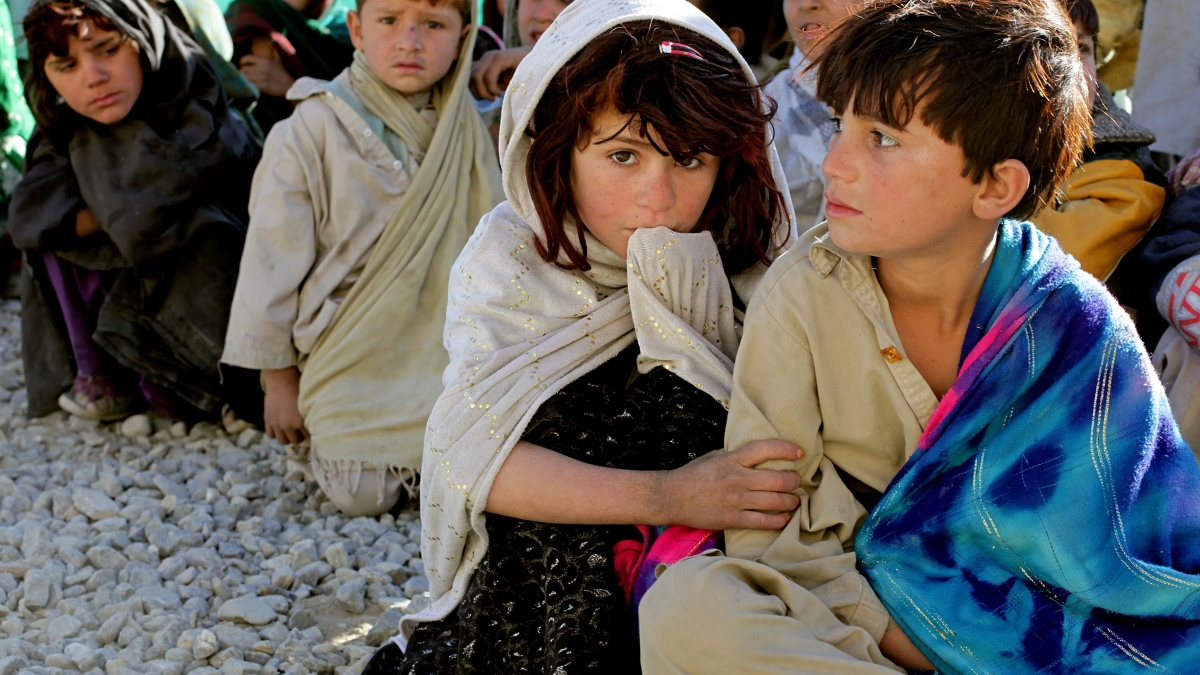

As drought, floods and water scarcity threaten the lives of millions of Afghans, the Taliban authorities have turned to the rapid extraction of mineral resources to compensate for declining foreign assistance. Without transparency, environmental oversight and the participation of local communities, this policy could further deepen Afghanistan’s climate crisis.
Five years after the Taliban returned to power in August 2021, Afghanistan stands at the intersection of three crises: political and economic isolation, the intensifying effects of climate change, and the growing exploitation of natural resources.
Recurring droughts, flash floods, declining groundwater reserves, soil erosion and the loss of vegetation have placed millions of people under increasing pressure. Meanwhile, the Taliban administration, deprived of much international development assistance and investment because it remains largely unrecognised, has presented mining as one of its most important sources of revenue.
The result is a dangerous cycle: climate change weakens natural resources and people’s livelihoods; poverty and declining incomes place greater pressure on land, forests, water and mineral reserves; and the unregulated exploitation of these resources further reduces nature’s capacity to withstand drought and flooding.
A Crisis That Did Not Begin in 2021
Afghanistan’s environmental degradation did not begin with the Taliban’s return to power. Even before 2021, decades of war, weak rule of law, illegal logging, overgrazing, unlawful mining, unplanned urbanisation and the mismanagement of water resources had left the country’s ecosystems extremely vulnerable.
The [United Nations Environment Programme](https://www.unep.org/topics/disasters-and-conflicts/country-presence/afghanistan) emphasises that decades of conflict, combined with drought and natural disasters, have had devastating consequences for Afghanistan’s people and biodiversity.
However, the political change of 2021 added another layer to the crisis. The collapse of previous institutions, the departure of large numbers of specialists, the suspension of development projects and the sharp decline in foreign assistance severely weakened the country’s institutional capacity to regulate natural resources and implement climate adaptation programmes.
According to published reports citing Afghanistan’s National Environmental Protection Agency, at least 32 projects related to climate adaptation and mitigation were halted or suspended following the Taliban’s return. Together, these projects were worth hundreds of millions of dollars and covered areas including water management, land conservation, clean energy, disaster-risk reduction and strengthening the resilience of rural communities.
Mining as a Substitute for Lost Financial Assistance
Before the Taliban’s return to power, a significant proportion of Afghanistan’s public budget and development projects was financed through international assistance. After 2021, these resources declined sharply, and many development programmes were suspended. Afghanistan’s economy contracted by around one-quarter during the first years after the political transition, while the banking system faced severe restrictions.
Under these circumstances, the Taliban made the extraction of coal, gold, copper, iron, lead, zinc, talc, marble, chromite and precious stones a central component of their economic policy.
An investigation by Afghan Witness, a project of the Centre for Information Resilience, found that the Taliban-run Ministry of Mines and Petroleum awarded at least 205 mining contracts to more than 150 companies between August 2021 and February 2024, an average of more than one contract per week.
In September 2023, the Taliban administration also announced that it had signed seven major contracts, with a combined stated value of more than $6.5 billion, with companies from Afghanistan and several foreign countries. The agreements covered the extraction of gold, copper, iron, lead and zinc in Takhar, Ghor, Herat and Logar provinces.
The announced value of these contracts, however, should not be confused with actual revenue or investment. Some of these projects have yet to enter full production, while independent access to information about their implementation, production volumes, actual revenues and the companies’ environmental obligations remains extremely limited.
The World Bank has also reported that the Taliban authorities have actively expanded the mining sector. Mining and quarrying grew by approximately 5.7 per cent in 2023 and four per cent in 2024. The increase in the administration’s non-tax revenues has also been partly linked to income from mining and related services.

The Costs That Do Not Appear in the Contracts
Mining inevitably carries environmental consequences. Even in countries with strong laws, independent institutions and advanced technology, it can lead to the loss of vegetation, soil erosion, water pollution, hazardous waste and the destruction of wildlife habitats.
The risks are greater in Afghanistan because very little public information is available about environmental-impact assessments, waste-disposal practices, water consumption, the rehabilitation of land after extraction, or compensation for affected communities.
Gold extraction can involve the large-scale washing of soil and the potential use of chemical substances. Mining copper, lead and zinc also creates the risk that heavy metals and acidic wastewater will enter the soil and water systems. Open-pit mining cuts through mountains and rangelands, while the construction of roads for transporting minerals fragments vegetation and natural habitats.
These forms of damage have an even greater impact in a dry and mountainous country. The loss of vegetation reduces the soil’s ability to absorb rainwater. Water consequently flows more rapidly over the ground, washes away fertile topsoil and increases the risk of flash floods. During dry seasons, land that has lost its vegetation also retains less water.
The destruction of forests and rangelands is therefore not merely a conservation issue. It is directly connected to food security, water resources, agriculture and the safety of rural communities.
A Warmer Climate, a More Vulnerable Country
Afghanistan contributes very little to global greenhouse-gas emissions, yet it remains highly vulnerable to the effects of climate change. Rising temperatures, increasingly irregular precipitation, declining snowfall, prolonged droughts and short periods of intense rainfall have altered the country’s natural water cycle.
Under these conditions, even a local economic activity can produce consequences far beyond the mining site. The extraction of water for mining can restrict nearby villages’ access to wells and springs. Accumulated mining waste may contaminate rivers used downstream for drinking and irrigation. The destruction of mountain slopes also increases the risk of erosion, landslides and flooding.
Kabul provides another example of the connection between climate change and resource mismanagement. According to an assessment published by Mercy Corps, groundwater levels in parts of the capital have fallen by between 25 and 30 metres over the past decade. Annual water extraction now exceeds the natural recharge of the city’s aquifers by approximately 44 million cubic metres.
Population growth and unplanned development have contributed to this crisis, but declining precipitation, rising temperatures, weak regulation and the absence of long-term investment have made it considerably worse.
An Environment Without Independent Oversight
One of the most serious problems is the absence of meaningful independent scrutiny. Journalists, researchers, civil-society organisations and local communities should be able to question mining contracts, environmental damage and the distribution of revenues. Restrictions on media freedom and civil society, however, have made access to such information increasingly difficult.
In many mining areas, it remains unclear how extensively local residents are involved in decision-making, whether their land is acquired with their consent and in return for fair compensation, how much mining revenue is reinvested in the affected area, and which institution is responsible for addressing pollution or damage to water resources.
The Taliban’s simultaneous roles as regulator, contracting authority and, in some cases, direct partner in mining projects also raise concerns about conflicts of interest. The Afghan Witness investigation found that the Taliban-run Ministry of Mines and Petroleum held shares in at least nine mining projects.
When the same institution profits from a project and is also responsible for supervising its consequences, the independence of the environmental-assessment process comes into question.
Political Isolation and the Environmental Punishment of Ordinary People
Another dimension of the problem concerns the policies of the international community. The Taliban administration’s lack of international recognition, banking restrictions and serious human-rights concerns have made direct engagement with the governing authorities difficult. In particular, the exclusion of women from education, employment and public life remains one of the principal obstacles to normalising international relations.
The suspension of climate projects, however, ultimately harms ordinary people more than Taliban leaders. A farmer who loses a harvest to drought, a family whose home is destroyed by flooding, or a village whose spring has dried up or become polluted has no role in the political decisions of those in power.
Afghanistan attended the COP29 climate summit in 2024 only as an observer. Continuing political uncertainty has restricted the country’s access to formal international climate finance, even as the need for investment in water management, the restoration of forests and rangelands, early-warning systems, climate-resilient agriculture and renewable energy grows each year.
Wealth That Could Produce Greater Poverty
Under the right conditions, Afghanistan’s mineral reserves could help create employment, develop infrastructure and increase public revenue. Mining itself is not the fundamental problem. The central questions concern how resources are extracted, who owns and benefits from them, whether revenues are transparent, and whether those involved are accountable to the environment and the public.
If contracts are awarded without transparent competition, independent assessment or the participation of local communities, mining revenues may become concentrated within narrow networks of power. Meanwhile, ordinary people would continue to bear the costs of pollution, water scarcity, illness and land degradation.
To prevent this scenario, Afghanistan needs the public disclosure of mining contracts, credible environmental-impact assessments, independent oversight, a ban on extraction in ecologically sensitive areas, stronger protection of water resources, and a clearly defined share of mining revenue for affected local communities.
The international community must also find ways to deliver climate and environmental support to the Afghan people without conferring political legitimacy on the Taliban authorities and while maintaining independent oversight. Direct investment in local communities, cooperation with specialised United Nations agencies, and support for independent researchers and media organisations could form part of this approach.
Afghanistan faces a decisive choice. With responsible management, its mineral resources could contribute to the country’s economic reconstruction. In the absence of transparency and the rule of law, however, they could become another chapter in the exploitation of Afghanistan’s resources and the destruction of its environment.
In a country where climate change is reducing arable land, water resources and food security year after year, accelerated mining is not simply about selling stones and metals. It could mean losing part of Afghanistan’s natural capacity to sustain life.
MORE STORIES
Afghanistan’s Major Oil Refinery: Energy Self-Sufficiency or a New Environmental Cost?
El Niño and the Coming Winter: More Rain for Afghanistan - an Opportunity or a Threat?