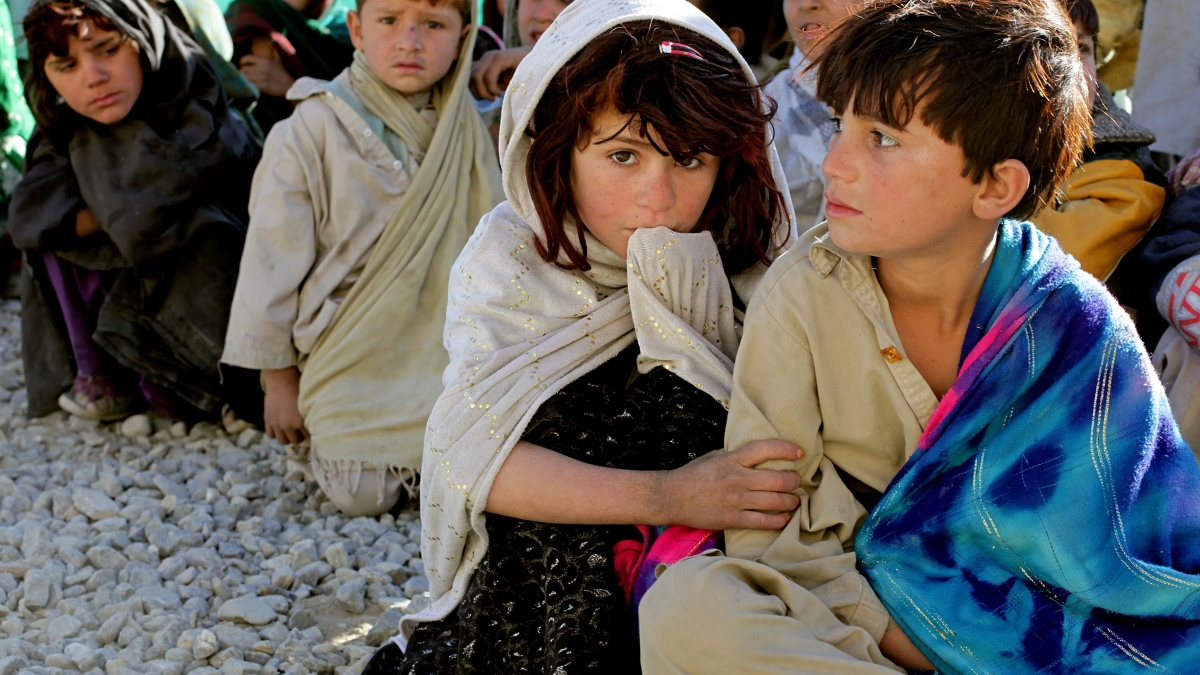
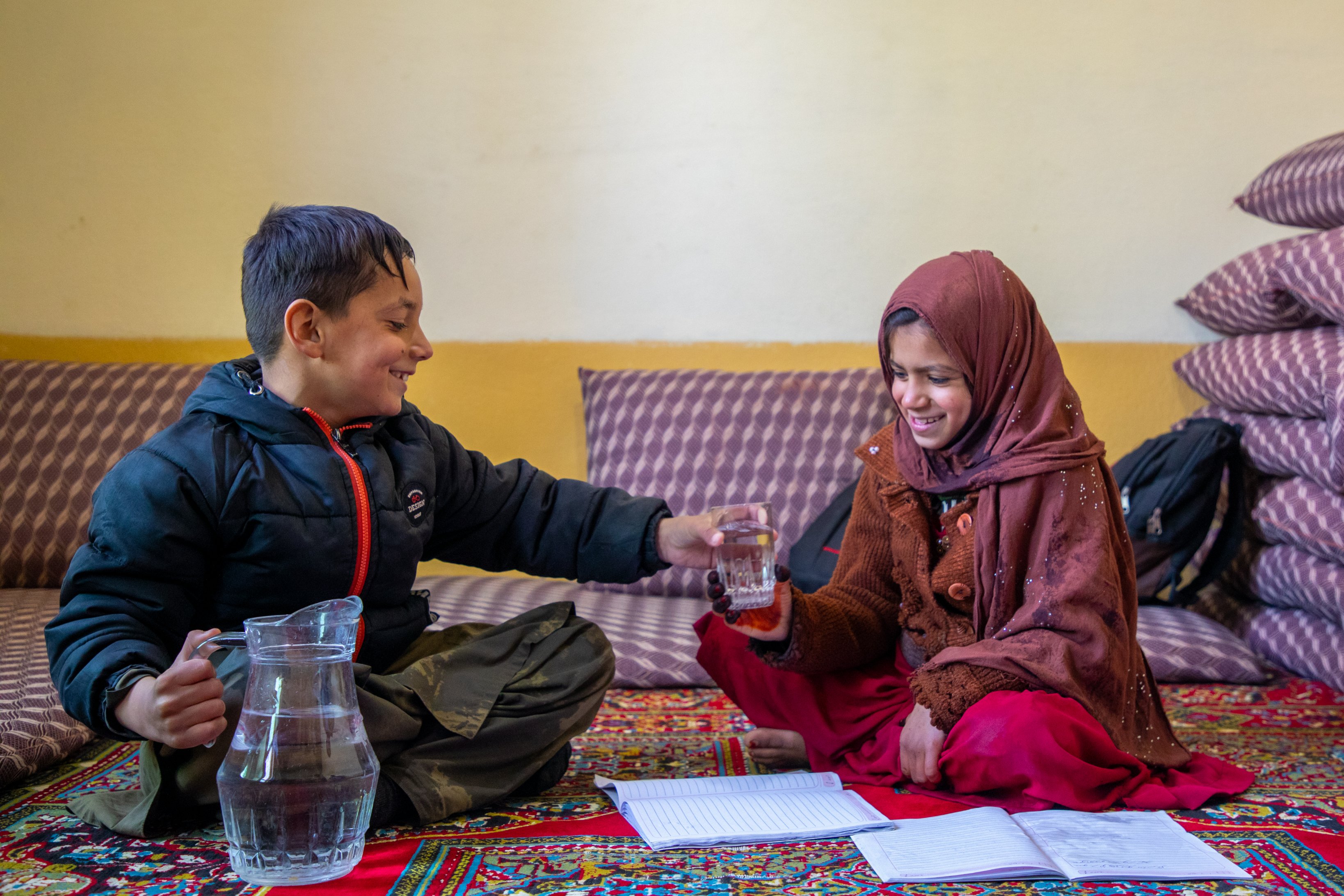
On World Water Day, Afghanistan’s water crisis reveals how climate shocks, damaged infrastructure and years of conflict converge — with women and children carrying the heaviest burden.
Water scarcity in Afghanistan is no longer only an environmental issue. It is a humanitarian crisis shaped by climate change, weakened public infrastructure and the long afterlife of conflict. On World Water Day, this reality deserves to be seen not simply through statistics, but through the daily lives of families who must search, carry, ration and often risk their health for water.
UNICEF’s Afghanistan messaging has warned that nearly one in three people in the country cannot access enough safe drinking water. At the same time, UNICEF and humanitarian partners reported major interventions in 2025, reaching millions with water, sanitation and hygiene support. Yet the gap between need and response remains stark. Afghanistan entered 2025 with an estimated 22.9 million people in need of humanitarian assistance, amid what UNICEF describes as a crisis shaped by conflict, entrenched poverty and climate-induced shocks.
When climate becomes daily hardship
Afghanistan contributes very little to global emissions, yet it is among the countries most exposed to climate stress. Drought cycles, erratic snowfall, groundwater depletion and rising temperatures are steadily narrowing the country’s water margin. What once appeared as seasonal scarcity has, in many places, become structural scarcity: wells run dry earlier, springs weaken, and households are forced to rely on unsafe or distant sources. UNICEF’s 2025 reporting explicitly links Afghanistan’s humanitarian needs to climate-induced shocks, underscoring how environmental pressure now intersects with poverty and fragility.
Water insecurity is therefore not only about the absence of rainfall. It is also about the inability of systems to absorb shocks. In communities where pipelines are damaged, treatment is weak, or storage systems are limited, every dry season becomes more dangerous.
Conflict does not end when the fighting stops
Decades of war have left Afghanistan with deeply uneven and fragile infrastructure. In many districts, water systems are damaged, under-maintained or incomplete. Earthquakes, floods and repeated displacement compound the problem. UNICEF’s end-of-year humanitarian reporting notes that despite funding constraints, WASH partners still reached 3.6 million people with access to enough safe water for drinking, cooking and personal hygiene in 2025, while 1,340,979 people gained access to sanitation facilities and 2,738,776 people received hygiene promotion support. These are significant achievements, but they also reveal how vast the unmet needs remain.
In this sense, water scarcity reflects the long shadow of conflict. The issue is not only that infrastructure was damaged, but that institutions, maintenance systems and local resilience were eroded over many years.
“In Afghanistan, water scarcity is not only a climate story. It is the point where drought, inequality and the afterlife of conflict meet.”
Women and girls pay the hidden price
The official theme of World Water Day 2026 is Water and Gender. That theme resonates powerfully in Afghanistan. UN-Water notes that access to safe water and sanitation is deeply connected to gender equality, because where water is not available close to home, women and girls spend more time collecting it, face greater exposure to insecurity, and lose time for school, work and public life.
In Afghanistan, this burden is often invisible in policy language but central in everyday life. The water crisis does not affect everyone equally. It is filtered through gender, geography, income and displacement. For women and girls, the absence of water nearby can mean hours of unpaid labour each day, increased health risks and reduced educational opportunity.
For children, unsafe water is a health emergency
Unsafe water exposes children to repeated illness, especially diarrhoeal disease and other waterborne infections. UNICEF has repeatedly warned that inadequate WASH access increases the risk of disease outbreaks and worsens child vulnerability. Safe water is therefore not only a service issue but a survival issue — particularly in a country where humanitarian needs remain extremely high and health systems are under pressure.
Key figures
- 22.9 million people in need of humanitarian assistance in Afghanistan in 2025
- 3.6 million people reached with safe water through the WASH response in 2025
- 1,340,979 people gained access to sanitation facilities
- 2,738,776 people received hygiene promotion support
- World Water Day 2026 theme: Water and Gender
Beyond aid: the politics of survival
Afghanistan’s water crisis can no longer be framed only as a development gap. It is a layered emergency. Climate change narrows the physical availability of water. Conflict and underinvestment weaken the systems meant to manage it. Social inequality shapes who can access safe sources and who cannot. The result is a form of slow, structural violence in which the absence of safe water steadily undermines health, dignity and stability.
World Water Day should therefore not be reduced to symbolism. In Afghanistan, water is about survival, but also about justice: who carries the burden, who is protected, and whose future is left exposed.
Sources: UNICEF Afghanistan humanitarian situation reports (2025); UN-Water, World Water Day 2026 campaign materials. :contentReference[oaicite:6]{index=6}
MORE STORIES
Afghanistan’s Major Oil Refinery: Energy Self-Sufficiency or a New Environmental Cost?
El Niño and the Coming Winter: More Rain for Afghanistan - an Opportunity or a Threat?