
EQLIMA
  • Home
  • Latest
  • Hydropolitics
  • Vegetation & Land
  • Wildlife
  • Urban Environment
  • Climate Migration
  • In-Depth

Select your language

  • Français
  • فارسی
  • English
When wells run dry: Afghan women pay the price of the water crisis

When wells run dry: Afghan women pay the price of the water crisis

Editorial Desk 11 October 2026

Water scarcity is an environmental challenge with unequal human consequences. For women, it can mean more work, fewer opportunities and greater difficulty exercising basic rights.

Afghanistan’s water crisis can be described through rainfall deficits and declining groundwater. Understanding its human consequences requires another set of questions: Who walks to collect water? Who pays for it? And who loses time for work, education or rest?

An Inter Press Service report published on 1 October 2026 describes women’s growing daily workload in Logar and Kabul as water sources dry up. Its accounts document longer journeys, the difficulty of carrying heavy containers and restrictions on washing to preserve drinking water.

The invisible work of securing water

Collecting, storing and managing household water is essential work. Yet it is often unpaid and receives limited attention in the planning of public services. When access deteriorates, this work requires more time and physical effort.

A gender justice approach would assess a water project beyond the volume supplied or the number of pipes installed. It would ask whether collection time has fallen, access routes have become safer and women have gained time for rest, livelihoods and their own needs.

A crisis with multiple causes

In its report of 22 March 2026, the International Committee of the Red Cross identifies drought, declining rainfall, population growth, returning migrants and uncontrolled groundwater extraction as pressures on Afghanistan’s water resources. Addressing scarcity therefore also requires better resource management and public services.

UNAMA’s assessment of 5 June 2026 links drought and water scarcity with agricultural losses, family displacement and growing competition over resources. Water security is consequently connected to livelihoods and social stability.

Water is a right

The United Nations human rights framework recognises the right to sufficient, safe, acceptable, accessible and affordable water for personal and domestic use. Water being present somewhere in a city does not, by itself, mean everyone can exercise that right.

Assessing equitable access requires examining household costs, distance, water quality and continuity of service. Women’s experiences should also inform the design and monitoring of supplies: the location of a communal tap or its distribution schedule can reshape daily life.

Solutions that reduce the burden

An equitable response requires reliable networks, water quality monitoring, groundwater protection and support for low-income households. Conservation education should accompany service improvements. Families already rationing water need better access.

Success should be measured by whether women spend less time and effort securing safe water, and whether households can meet essential needs regardless of income. This approach connects water management with the protection of health, dignity and equality.

MORE STORIES
Afghanistan’s Major Oil Refinery: Energy Self-Sufficiency or a New Environmental Cost?
12 September 2026
The Afghanistan Chamber of Commerce and Investment has announced plans to establish a joint-stock company to build a major oil refinery. According to the available information, the facility would have...
El Niño and the Coming Winter: More Rain for Afghanistan - an Opportunity or a Threat?
09 September 2026
A strengthening El Niño could influence Afghanistan’s rainfall during the coming winter. FAO’s September seasonal climate and agricultural outlook indicates the possibility of wetter conditions—a pote...
When Drought Takes Food Away from Children
07 August 2026
Afghanistan’s malnutrition crisis has reached an alarming stage. According to the latest World Food Programme report, an estimated 3.7 million children and 1.2 million pregnant or breastfeeding women ...

What Comes After “Peak Water”? Melting Hindu Kush Glaciers and Afghanistan’s Water Future

What Comes After “Peak Water”? Melting Hindu Kush Glaciers and Afghanistan’s Water Future

Editorial Desk 20 September 2026

Glacier melt is commonly associated with increasing river flows. But this increase does not last forever. As temperatures rise, glaciers initially release more water. Once their stored ice has substantially diminished, however, the volume of meltwater begins to decline. Scientists describe this turning point as “peak water.”

A recent assessment of the Himalayan region warns that accelerating glacier loss is bringing mountain water systems closer to this critical threshold. Although the assessment primarily focuses on the central and eastern Himalayas, peak water is also highly relevant to Afghanistan’s Hindu Kush, where rivers and mountain communities depend on water stored as snow and ice.

How does peak water occur?

A glacier functions as a long-term freshwater reservoir. Snow accumulates at high elevations over many years, gradually becoming ice. During warmer months, the ice melts slowly, helping sustain rivers, particularly during dry periods.

Rising temperatures disturb this natural cycle. At first, accelerated melting may send more water into rivers. This can create the impression that water resources are increasing, while in reality a reserve accumulated over decades or centuries is being depleted.

Eventually, a glacier becomes too small to generate its former volume of meltwater. After peak water is reached, glacier-fed runoff begins a long-term decline, even as temperatures continue rising.

Two simultaneous threats

Afghanistan could face two different but connected dangers during this transition.

The first is a short-term increase in flash floods, rockfalls, landslides and glacial lake outburst floods. Melting ice and thawing mountain permafrost can destabilise slopes. Expanding glacial lakes may also place pressure on natural barriers, potentially releasing large quantities of water without sufficient warning.

The second danger is long-term water scarcity. As glaciers shrink and snow reserves decline, rivers may carry less water during dry seasons. This could reduce irrigation supplies, affect hydropower, intensify pressure on drinking-water systems and contribute to rural displacement.

The Hindu Kush contains the headwaters or parts of the catchments of important rivers, including the Amu Darya, Kabul, Helmand and Hari Rud. However, the contribution of glacier melt differs considerably between river basins. Rainfall, seasonal snow, groundwater and water management also shape river flows. It is therefore not scientifically appropriate to assign one peak-water date to all of Afghanistan.

Afghanistan’s monitoring gap

A major challenge is the shortage of weather stations, snow measurements, field-based glacier research and functioning early-warning systems. Satellite images can reveal changes in glacier area and the formation of new lakes, but they cannot fully replace continuous measurements on the ground.

Without reliable data, it is difficult to determine which glaciers are retreating fastest, which glacial lakes threaten downstream settlements and how much river flow may change over the coming decades.

The International Centre for Integrated Mountain Development describes the Hindu Kush–Himalaya as the “water tower of Asia.” Its assessments indicate that the region’s glaciers lost ice 65% faster during 2011–2020 than in the preceding decade. Under high-emission scenarios, a large proportion of the region’s glaciers could disappear by the end of this century.

What can Afghanistan do?

The first priority should be a national inventory and monitoring programme for glaciers and glacial lakes. Potential hotspots in Badakhshan, Wakhan, Nuristan, Panjshir and other mountainous areas should be examined through a combination of satellite observation and field research.

Early-warning systems in vulnerable valleys, community training, evacuation routes and restrictions on construction in flood channels could substantially reduce casualties.

Better water management must also begin before river flows decline sharply. Protecting watersheds, restoring forests and rangelands, capturing water locally, replenishing groundwater and improving irrigation efficiency would help communities adjust to a less predictable water supply.

The glaciers of the Hindu Kush are not merely remote masses of mountain ice. They are part of Afghanistan’s natural water infrastructure. A temporary increase in river flow should not be mistaken for permanent abundance. It may instead mark the stage before decline, as an ancient reserve is consumed faster than nature can restore it.

MORE STORIES
Afghanistan’s Major Oil Refinery: Energy Self-Sufficiency or a New Environmental Cost?
12 September 2026
The Afghanistan Chamber of Commerce and Investment has announced plans to establish a joint-stock company to build a major oil refinery. According to the available information, the facility would have...
El Niño and the Coming Winter: More Rain for Afghanistan - an Opportunity or a Threat?
09 September 2026
A strengthening El Niño could influence Afghanistan’s rainfall during the coming winter. FAO’s September seasonal climate and agricultural outlook indicates the possibility of wetter conditions—a pote...
When Drought Takes Food Away from Children
07 August 2026
Afghanistan’s malnutrition crisis has reached an alarming stage. According to the latest World Food Programme report, an estimated 3.7 million children and 1.2 million pregnant or breastfeeding women ...

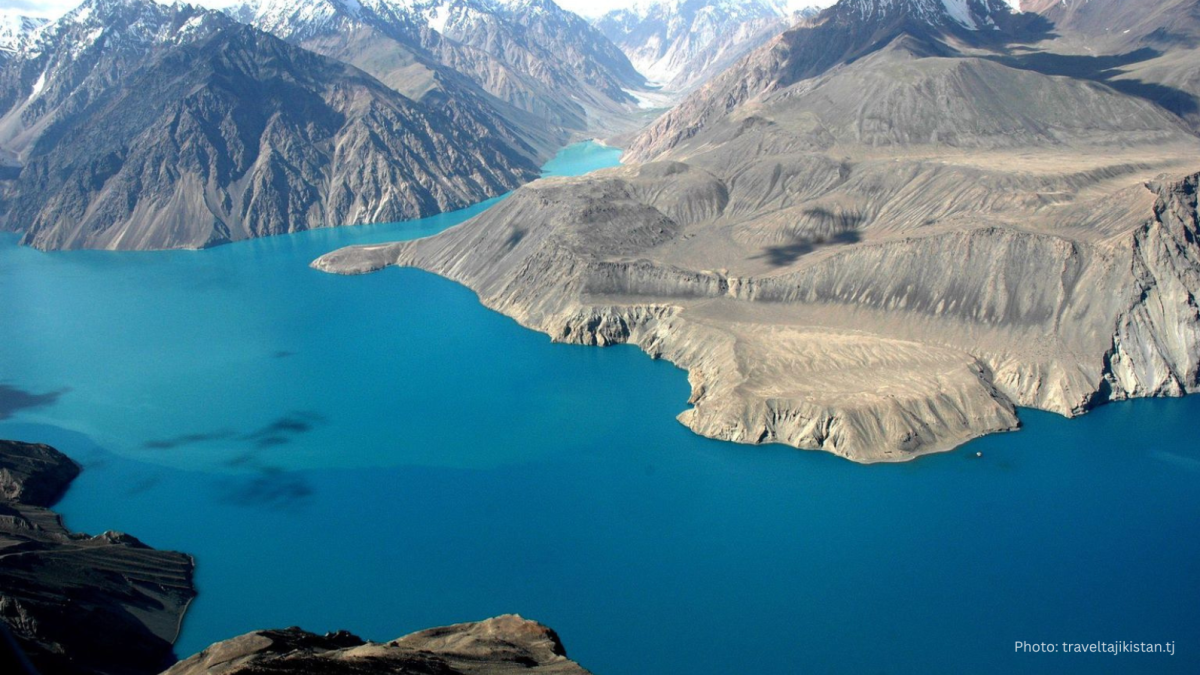
Lake Sarez: Central Asia’s Sleeping Giant Threatens Northern Afghanistan

Lake Sarez: Central Asia’s Sleeping Giant Threatens Northern Afghanistan

Editorial Desk 05 September 2026

Following the devastating landslide and flood in Nepal, discussions have emerged about the importance of early-warning systems and their effectiveness in reducing the human and material consequences of such disasters. To provide a broader understanding of this issue, Eqlima examines a hidden threat in the shared Tajikistan–Afghanistan water basin: Lake Sarez.

Read more: Lake Sarez: Central Asia’s Sleeping Giant Threatens Northern Afghanistan
About | Contact
Editorial Policy
Privacy Policy
  • Facebook
  • X
  • Instagram
  • Youtube
  • Whatsapp
  • Linkedin
© 2025-2026 EQLIMA. All rights reserved.
  • Home
  • Latest
  • Hydropolitics
  • Vegetation & Land
  • Wildlife
  • Urban Environment
  • Climate Migration
  • In-Depth
EQLIMA uses essential cookies to ensure the website functions properly. With your consent, we may also use optional cookies to improve your browsing experience. By continuing to use this website, you agree to our use of cookies. Learn more in our Privacy Policy.
accept